


Native semantics
- Real buttons and switches, never clickable divs
- Every icon button has an accessible name
- Active profiles expose selected state, not just colour
- Grouped controls announce their group
Changes one visitor’s view, never your code.
A widget doesn't fix the underlying site.
In 2025 the FTC ordered accessiBe to pay $1M1 over claims its widget made sites compliant. About 1 in 52 US accessibility lawsuits still targeted sites that already had a widget. And 83.9%3 of the top million home pages have low contrast text, which only a code fix removes.
1 in 5: EcomBack, 456 of 2,014 lawsuits. Figures current at publication.
Example states only. Run an audit for measured findings.
Drag or use arrow keys. The score reflects code changes.
Illustrative sample scores · no scan is run by this slider
Most overlays fail their own audit. Ours meets the standard we apply to you.
Designed for keyboards, assistive technology and display preferences. Complete journeys still need human testing.
Panel barriers get our highest priority.
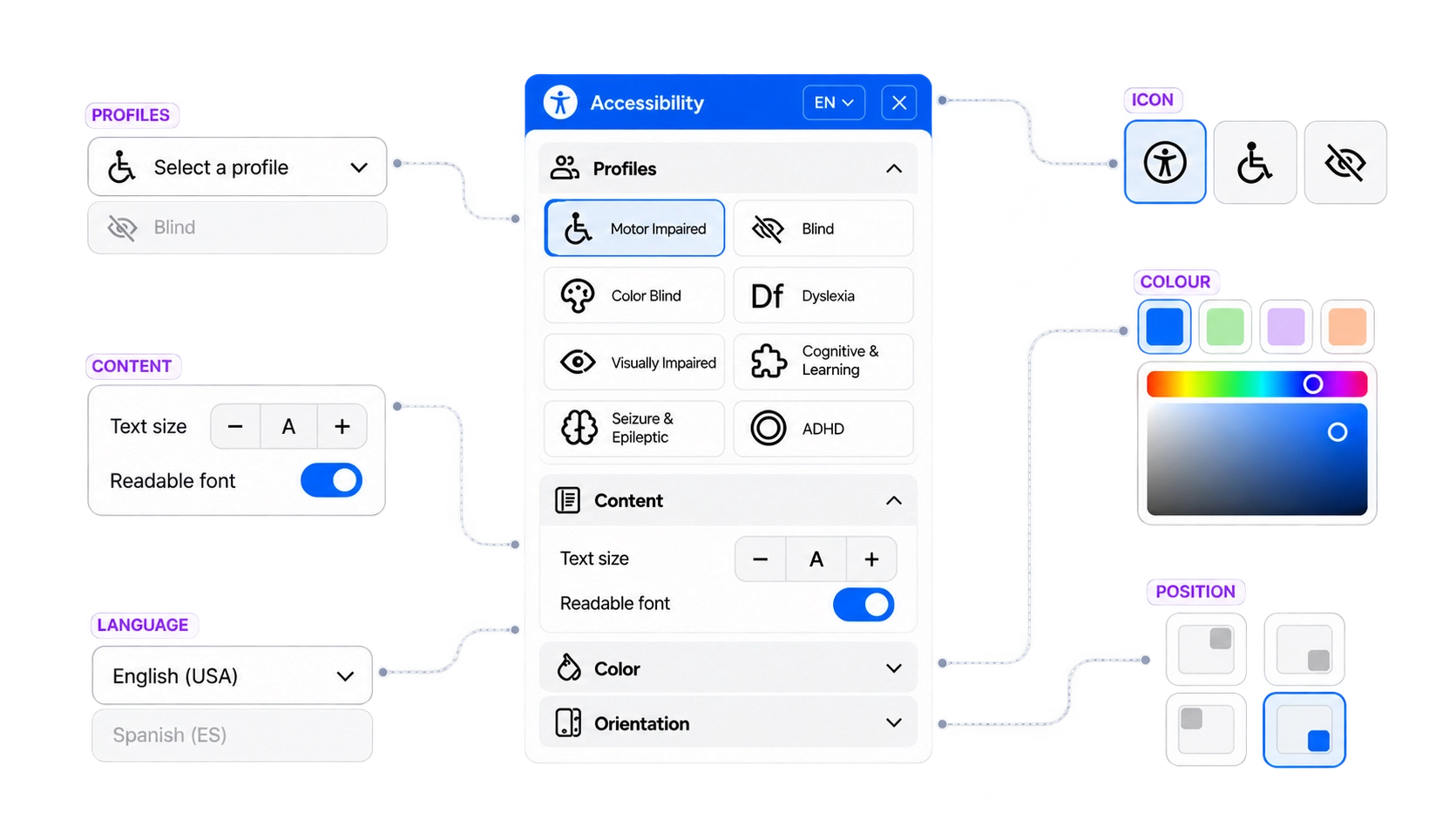
Profiles, Content, Color, and Orientation groups as they appear on a live site.
About performance, settings and accessibility limits.
No. The panel changes preferences, not markup or audit findings.
It respects system settings and stays dismissed once closed.
The script loads asynchronously, and the panel loads only when opened.
Yes: native controls, real labels, contained focus and 44px targets.
Yes: position, colour, icon and language. We warn you if colours fail contrast.
Only their settings and total usage counts. No page content, no visitor profiles.
No. The EAA judges the product itself, not an add on. Overlays don't make a site compliant.
Preferences help people today. Code fixes take a sprint. Both matter.